

- Login
- Search

- Contact Us

-
Have a question? Our team is here to help guide you on your automation journey.
-
Explore support plans designed to match your business requirements.
-
How can we help you?
-


English
Close
- Resources
Featured
 Named a 2026 Gartner® Magic Quadrant™ Leader for RPA.Recognized as a Leader for the Eighth Year in a Row Download report Download report
Up to 90% reduction in manual work
By leveraging advanced AI agents, organizations can accelerate cycle times and strengthen governance—without adding operational complexity.
What are the benefits of procure-to-pay automation?
Increase efficiency and improve cash flow visibility.
Automate invoice processing from capture through payment with AI-powered 3 way matching, coding, validation, and approvals, helping ensure invoices are processed accurately and on time.
Get the solution brief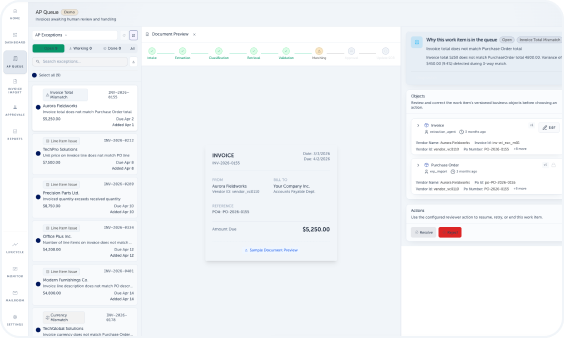
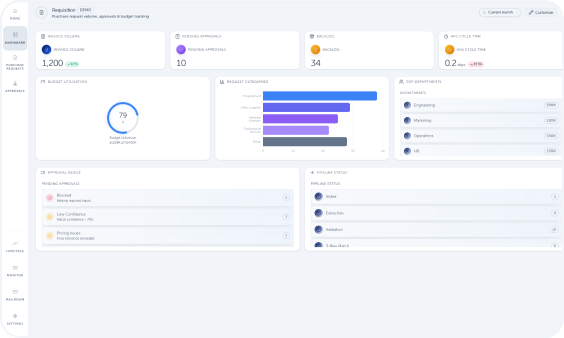
Get purchases approved faster and keep work moving.
Streamline requisition creation and approvals with guided workflows and AI-powered assistance that helps employees make informed purchasing decisions, reducing delays and accelerating cycle times.
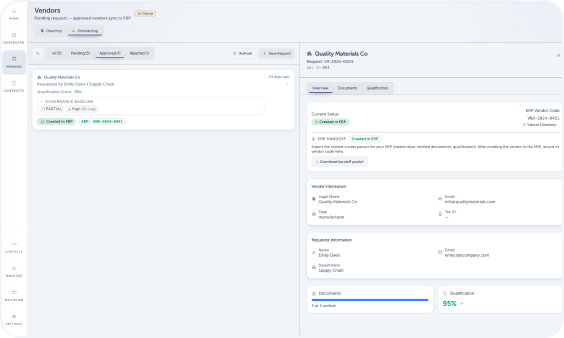
Build stronger supplier relationships while reducing risk.
Leverage streamlined supplier validation, qualification checks, document collection, and readiness reviews to speed up onboarding and maintain compliance while handing off accurate vendor data to ERP and vendor management systems.
How much could you save by automating Procure-to-Pay?
Fill in the table below and we'll calculate your potential ROI.
Calculate your potential savings with
Automation Anywhere
Get your custom ROI
Fill in your inputs on the left, then click "Calculate My ROI" to unlock your personalized results.
Calculate my ROIBenefit Summary
Total Savings
$0
Reduced cost per invoice
0%
DPO Days Improved
0
Improve Cash Flow
Reduced Cost of capital
$0
Protect Margin
Reduced Supplier Penalties
$0
Improved Supplier Discounts
$0
Maverick Spend Reduction
$0
Total Benefit Summary
$0
Estimated based on multiple industry reports and customer data.
How can procure-to-pay automation help your business?
Synchronize Activities
Seamlessly connect and orchestrate your enterprise data, workflows, and systems across the entire procure-to-pay lifecycle using built-in integrations to legacy systems and APIs.
Reduce Errors
Validate data against relevant PO and goods/services receipts to ensure accuracy. Keep track of the PO lifecycle from beginning to end; no invoice is lost or payment late.
Improve Processes
Drive more accurate invoice processing with intelligent data extraction and 3 way matching. Cross-reference supplier payment terms and processes to improve terms and discounts.
Strengthen Controls
Manage supplier activity with confidence for a more resilient supply structure. Locate areas where maverick spending is more common and which one-offs are necessary.
What should you look for in a procure to pay automation solution?
- Built-in compliance and governance controls to help enforce policies, reduce risk, and support audit readiness.
- Agentic AI capabilities that can proactively handle tasks, make informed decisions, and adapt to changing business needs.
- Seamless integration with enterprise systems, including ERP, finance, procurement, and other business applications.
- Cloud-native scalability that supports current requirements and future automation use cases as your business grows.
- Flexible deployment options that work across cloud, hybrid, and on-premises environments.
Who benefits from procure-to-pay automation?
- Purchasers
- Procurement
- Accounts Payable
Purchasers
Manually creating purchase orders means your teams are wasting time manually searching for information. With our P2P automation software, team members can simply ask Sol, the built-in AI assistant, to create the PO, resulting in faster purchase processing.

Procurement
Procurement teams need visibility and control over organizational spend, from vendor onboarding through purchasing and payment. P2P automation streamlines vendor onboarding and purchasing workflows, consolidates supplier data, increases compliance with preferred supplier and purchasing policies, and provides real-time insights that help reduce maverick spending, improve purchasing efficiency, and drive cost savings.

Accounts Payable
The cost of invoice processing is closely tied to the level of automation, according to the Institute of Finance and Management (IOFM) data. Manual workflows can lead to invoice backlogs, errors, and payment delays. Our solution delivers accounts payable automation (and 3 way matching for accounts payable) that helps AP teams reduce costs, improve accuracy, and handle higher invoice volumes efficiently.

More procure-to-pay resources.

Playbook
The Agentic Advantage for Finance Leaders
Read playbook
Solution Brief
Streamline Procure-to-Pay with AI Agents
Download Solution Brief
Blog
AI Agents for Procurement
Read blogP2P Automation FAQs
What are the best tools for automating the procure-to-pay process?
Some of the best procure-to-pay automation tools include Automation Anywhere’s P2P solution, Coupa, SAP Ariba, and Oracle Procurement. These solutions deliver purchasing and accounts payable automation, vendor onboarding, and more through integrated workflows. Organizations typically choose a solution based on their size, existing technology stack, scalability requirements, and desired level of automation, visibility, and control across procurement and finance operations.
Can small businesses benefit from procure-to-pay automation?
Yes, small businesses can gain significant benefits from P2P automation. Automated workflows reduce manual data entry, accelerate approvals, improve invoice accuracy, and help manage cash flow more effectively. Many cloud-based solutions offer affordable pricing and scalability, making them accessible to smaller organizations. As a result, businesses can spend less time on administrative tasks and focus more on growth and strategic initiatives.
How does procure-to-pay automation improve financial efficiency?
Procure-to-pay automation improves financial efficiency by streamlining purchasing, invoice processing, approval workflows, and payment execution. Using agentic AI for finance and accounting reduces manual effort, processing time, and errors while preventing duplicate payments. Faster transaction processing, standardized workflows, and reduced administrative overhead lower operating costs, increase productivity, and enable finance teams to handle greater transaction volumes with the same resources.
What are the common challenges faced when implementing procure-to-pay automation?
Organizations often face challenges such as smoothly integrating automation software with existing ERP systems, managing data migration, and standardizing procurement processes. Employee resistance to change and insufficient training can also slow adoption. Additionally, businesses must ensure supplier participation and maintain data accuracy throughout implementation. Careful planning, stakeholder involvement, and ongoing support are essential for overcoming these challenges and achieving successful automation outcomes.
How does procurement process automation work in large organizations?
In large organizations, procurement process automation connects procurement, finance, and supplier activities through centralized digital workflows. Employees submit purchase requests electronically, which are routed automatically for approval based on predefined policies. Approved purchases generate purchase orders, while invoices are matched against orders and receipts using automated checks. This approach improves compliance, enhances spend visibility, and enables efficient management of high transaction volumes across departments.
How can procurement automation improve business operation efficiency?
Procurement automation improves operational efficiency by eliminating repetitive manual tasks and accelerating purchasing cycles. Automated approvals, supplier communications, purchase order creation, and invoice automation reduce administrative workloads and minimize delays. Employees can focus on strategic work rather than paperwork, while managers gain real-time visibility into spending and supplier performance. This leads to faster decision-making, stronger compliance, and more productive business operations overall.
Can procurement automation help reduce costs and errors?
Yes, procurement automation can significantly reduce both costs and errors. Automated workflows minimize manual data entry mistakes, prevent duplicate invoices, and improve compliance with purchasing policies. Better spend tracking helps organizations identify savings opportunities and negotiate more effectively with suppliers. Additionally, reduced processing time lowers administrative expenses, while improved accuracy decreases the risk of payment disputes, financial losses, and operational inefficiencies.
Ready to transform your procure-to-pay process with Agentic AI?
Request demo
Unlock Your P2P Results
Enter your details below to see your personalized Procure-to-Pay savings estimate.


Try


For Students & Developers
Start automating instantly with FREE access to full-featured automation with Cloud Community Edition.
